
The Klevie Growth Engine is a five-phase framework that turns a business diagnosis into a plan, execution, and a learning loop that compounds over time. It runs as a single cycle, not a set of disconnected projects: you diagnose the business, translate that into a plan, set up the operation, scale what works, and feed the results back into the next round. This guide walks through how each phase works, what powers the diagnosis, and the principles you can apply even if you run the process yourself.
What is the Klevie Growth Engine?
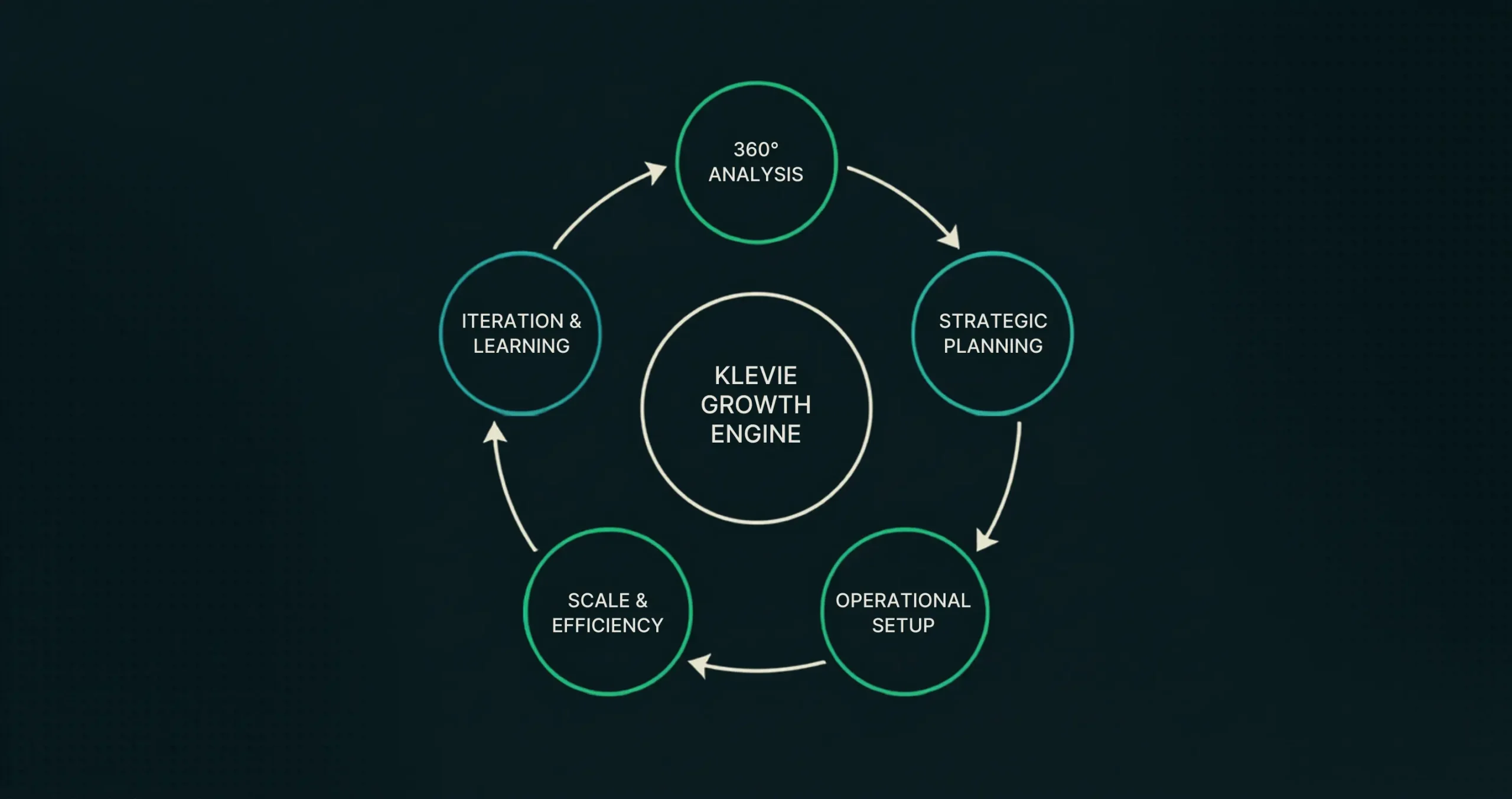
The Klevie Growth Engine is a methodology that structures diagnosis, planning, execution and continuous learning into one operating cycle. Five phases run in sequence and then loop: 360° Analysis, Strategic Planning, Operational Setup, Scale & Efficiency, and Iteration & Learning.
The word that matters there is cycle. Most growth work is treated as a list of one-off projects: run a campaign, install a CRM, rebrand, repeat. The Engine treats those same activities as connected stages of one loop, where each round feeds the next. That is what lets results compound instead of resetting every quarter.
The first phase is powered by the Atlas Diagnostic System and delivered through a structured assessment called the Klevie Scale Check. Every conclusion is reviewed and validated by senior consultants. We come back to both below.
Why scattered growth tactics usually fail
Plenty of companies buy tactics before they have a diagnosis. They see a competitor running paid social, so they run paid social. They feel disorganized, so they buy a CRM. Each move is reasonable on its own, and the sum of them goes nowhere, because nothing connects the spend to a clear picture of where the business is actually stuck.
The second failure is the missing loop. A team runs a quarter of activity, gets mixed results, and starts the next quarter from scratch with new ideas instead of what the last quarter taught them. Without a feedback loop, you are not building on anything. You are paying the tuition and throwing away the lesson.
A framework solves both. It forces a diagnosis before the spend, sequences the work by what will actually move the business, and closes the loop so each cycle is smarter than the last. That is the job the Klevie Growth Engine does.
The five phases, one at a time
Phase 1: 360° Analysis
The cycle starts with a map, not a plan. The 360° Analysis reads the strategic, operational and digital reality of the business and surfaces the patterns and blockers holding growth back. It is powered by the Atlas Diagnostic System and delivered through the Klevie Scale Check, ending in a clear diagnosis and prioritized recommendations. You cannot fix what you have not diagnosed, so everything downstream depends on getting this phase right.
Phase 2: Strategic Planning
The diagnosis becomes a working plan. Vision is translated into OKRs, the go-to-market is aligned, and growth levers are sequenced for execution by impact and effort. Sequencing is the quiet skill here: the point is to order the few things that will help most, so the team works on what matters first instead of everything at once.
Phase 3: Operational Setup
Strategy fails when it is not wired to execution. This phase configures the infrastructure, processes, technology and reporting so that strategy and execution stay connected across teams, channels and performance cycles. The reporting layer matters as much as the rest: if the people running the work cannot see the numbers in real time, the plan drifts within weeks.
Phase 4: Scale & Efficiency
Only what has been validated gets scaled. Initiatives that proved out in the earlier rounds are scaled with operational consistency, and the highest-performing practices are consolidated across the full growth operation. Scaling an unvalidated idea just multiplies a mistake, which is why this phase comes after evidence, not before it.
Phase 5: Iteration & Learning
The loop closes here. Cycles of experimentation and structured learning feed back into the plan, extending the compounding effect over successive execution windows. Each round leaves the next one better informed. This is the phase that turns a single good quarter into a system that keeps improving.
What is the Atlas Diagnostic System?
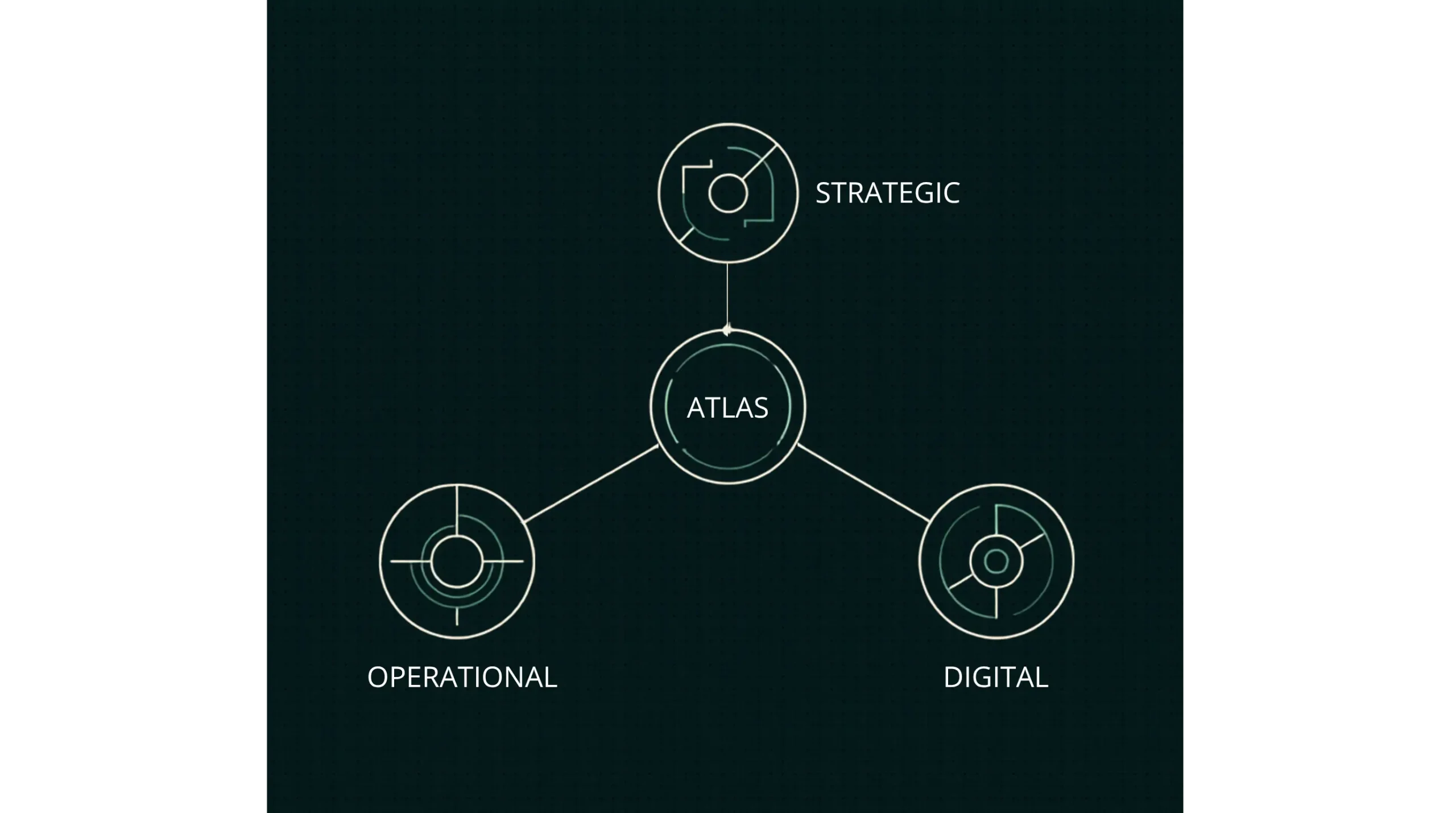
Atlas is Klevie’s internal diagnostic system. It combines artificial intelligence with the Klevie analytical framework to surface patterns and growth blockers across the strategic, operational and digital dimensions of a business. In plain terms, the AI does the heavy lifting of structuring and pattern-finding across a lot of data, faster than a person could.
The part that keeps it credible is human. Final conclusions, priorities and recommendations are always defined, reviewed and validated by senior Klevie consultants, and every assessment includes human quality assurance. The AI accelerates the analysis; the judgment that turns analysis into a decision stays with people who have run growth before.
What happens in a Klevie Scale Check?
The Scale Check is how Phase 1 is delivered. It runs over four touchpoints:
- Data sharing. You share the inputs Atlas needs to read the business.
- A structured discovery meeting of about an hour, to understand the business beyond the data.
- An optional clarification session of about 30 minutes, where it helps.
- A final delivery meeting of about an hour, to walk through the findings.
The output is an executive report with a strategic diagnosis, a map of growth blockers, and prioritized recommendations across short, medium and long-term horizons. It is the artifact that sets up everything the rest of the Engine acts on. We use the same diagnostic discipline when we help European brands enter the US market, where the diagnosis decides whether and where to enter.
How the working model keeps it honest
A framework only works if someone keeps it on track between phases. The working model is built on radical transparency, with three habits:
- Weekly check-ins of about 30 minutes, to track performance, align priorities and surface blockers early in the cycle, before they become expensive.
- A monthly strategic review of about an hour, to review results, present reporting and set the objectives for the next cycle.
- Live reporting and dashboards that connect marketing, sales and finance data in real time, so the client sees the same numbers we do.
Underneath all of it, everything is documented. Every test leaves a record covering audiences, creative, copy and landing pages, with an account of what worked and what did not. That record is what makes Phase 5 possible: you cannot learn from a cycle you did not write down.
How to apply this thinking, even without us
You do not need to hire anyone to use the logic of the Engine. Three principles carry most of the value.
Diagnose before you spend. Resist the urge to buy a tactic because a competitor is using it. Map where the business is actually stuck first, then spend against that. Second, sequence by impact and effort, not by enthusiasm. Write down every lever you could pull, then order them so the few that move the business come first. Third, build the loop. Set a weekly cadence to catch problems early and a monthly one to decide what changes, and write down every test so the next cycle starts smarter than the last.
Run those three honestly and you have the spine of a growth system. The Klevie Growth Engine is our implementation of it, with Atlas doing the diagnosis and senior consultants owning the judgment, but the thinking is yours to use.
Frequently asked questions
What is the Klevie Growth Engine?
It is a five-phase growth framework that runs as a single operating cycle: 360° Analysis, Strategic Planning, Operational Setup, Scale & Efficiency, and Iteration & Learning. It structures diagnosis, planning, execution and continuous learning so results compound over time.
What is the Atlas Diagnostic System?
Atlas is Klevie’s internal diagnostic system. It combines artificial intelligence with Klevie’s analytical framework to surface patterns and growth blockers across the strategic, operational and digital dimensions of a business. Conclusions are always validated by senior consultants.
What is a Klevie Scale Check?
The Scale Check delivers Phase 1 of the Engine through four touchpoints: data sharing, a structured discovery meeting, an optional clarification session, and a final delivery meeting. The output is an executive report with a strategic diagnosis, a growth blockers map, and prioritized recommendations.
How is this different from a one-off growth audit?
An audit ends with a document. The Engine treats the diagnosis as the start of a cycle that plans, executes, scales and learns, then loops, so the work compounds instead of stopping at a report.
Can a company apply the framework on its own?
The logic, yes: diagnose before spending, sequence work by impact and effort, and build a weekly and monthly feedback loop with everything documented. The Atlas-powered diagnosis and senior validation are what Klevie adds on top.
Want to see what the diagnosis says about your business?
The Klevie Scale Check is where the Engine starts. Request a strategy call and we will tell you, honestly, where your growth is stuck and what to do about it first.