
Most European brands that struggle in the US do not fail because the product is wrong. They fail because they run the US on home-market assumptions: home pricing, home acquisition costs, home logistics, and a launch spread too thin to learn anything. Below are the mistakes that come up most often, why they happen, and what to do instead. This is a companion to our full guide to US market entry for European brands.
1. Treating the US as one homogeneous market
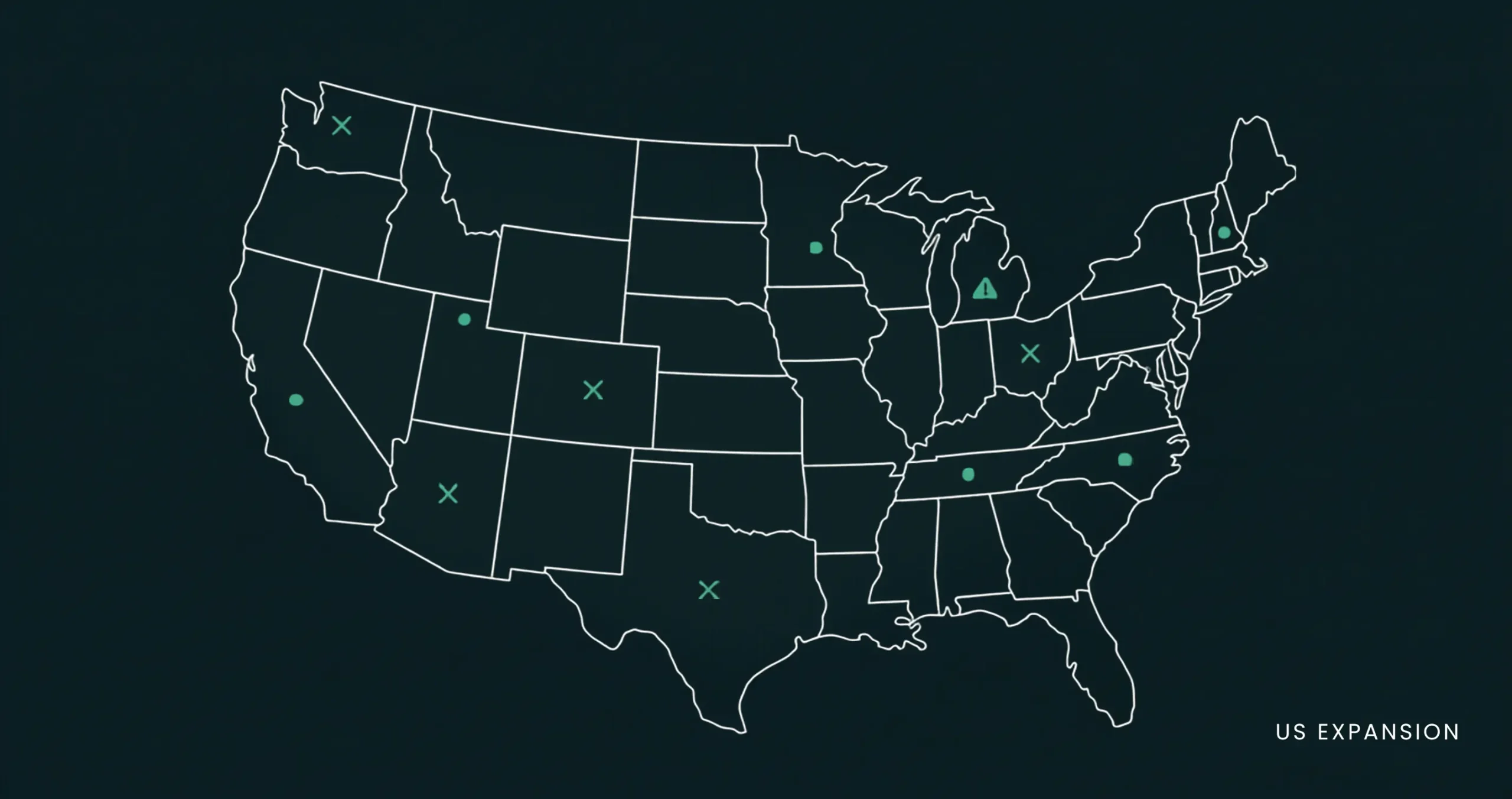
The brands most careful about the differences between European countries often assume the US is uniform because it shares one language and currency. It is one market, but a customer in Brooklyn is not a customer in Dallas, and a national launch competes against everyone at once.
What it costs: budget spread across a country of 330 million people with no clear signal about who actually responds. What to do instead: pick one beachhead segment, win it, and expand from evidence. A focused entry tells you whether your positioning works before you scale the spend.
2. Pricing it like the home market
European pricing instincts do not transfer cleanly. Prices in the US are shown excluding tax and added at checkout, which changes the perceived price. Beyond that, brands often arrive priced for their home market and find they are either too cheap to signal quality or too expensive against well-funded local competitors.
What it costs: conversion at checkout and margin you did not need to give away. What to do instead: set US pricing against US competitors and US willingness to pay, show prices the way American shoppers expect, and make sure the price still leaves room for US acquisition costs.
3. Modeling on home-market acquisition costs
This is the quiet runway killer. Brands build the US plan on the customer acquisition cost they know at home, then meet the most competitive ad auctions in the world and run out of money in the first quarter.
What it costs: the whole budget, before you have learned anything. What to do instead: model US acquisition cost honestly, then check that the margin survives it. The number that matters here is contribution margin after acquisition, and if it does not hold, the plan needs fixing before launch, not after. We cover this in what is contribution margin (CM1, CM2, CM3).
4. Running European shipping and returns
American shoppers expect fast shipping, often free, and returns that are close to frictionless. The Amazon Prime standard sets the baseline whether you sell on Amazon or not. A European fulfillment center shipping across the Atlantic cannot meet that on cost or speed.
What it costs: the second purchase, which is where direct-to-consumer economics actually live. Slow delivery and an awkward returns flow lose the repeat customer. What to do instead: move fulfillment to a US 3PL or split inventory, and build a returns process an American shopper recognizes.
5. Ignoring sales tax until it becomes a problem
The US has no federal VAT. Sales tax is set by states and localities, and after the 2018 South Dakota v. Wayfair ruling, states can require out-of-state sellers to collect it once they pass an economic threshold. Those thresholds vary by state, and the obligation does not wait for you to notice it.
What it costs: a back-tax liability that surfaces during diligence or at scale, exactly when it hurts most. What to do instead: register and collect where you have nexus, before volume builds. This is not legal or tax advice; confirm your specific obligations with a US accountant.
6. Translating instead of localizing
Translation handles language. Localization rebuilds the experience for an American buyer: pricing display, sizing, units, date formats, the tone of the copy, the proof you show, and the objections you answer. A literal translation reads as foreign at the exact moment a customer decides whether to trust you.
What it costs: conversion, quietly, because the store feels like it was not built for the customer in front of it. What to do instead: localize the experience, not just the words. We go deeper in how to localize your brand for US customers.
7. Skipping the trust signals US shoppers look for
American buyers check for signals that a brand is real and reachable: a .com domain, US customer reviews, a US address and phone number, US spelling and sizing. A European brand that shows none of these feels risky to buy from, even with a good product.
What it costs: first-time conversion from customers who have never heard of you. What to do instead: build the US-facing trust layer before you drive paid traffic to the store, so the spend lands on a page people are willing to buy from.
8. Treating US entry as a side project
The US is often run as one more channel on top of an already busy team, with no dedicated focus and no owner. Entry done in spare time tends to get spare results.
What it costs: a half-launch that never gets a fair test, then a conclusion that “the US did not work” when it was never really tried. What to do instead: give the entry a clear owner, a focused scope, and a real timeline, and treat the first phase as diagnosis and setup rather than expecting sales from day one.
The pattern behind all of these
Every mistake here is the same root error in a different costume: running the US on home assumptions instead of diagnosing it as its own market. The fix is the same too. Diagnose first, pick a focused entry, model the economics honestly, and build the operation an American customer expects before you spend to acquire them. That sequence is the spine of our US market entry guide.
Frequently asked questions
What is the most common mistake European brands make entering the US?
Running the US on home-market assumptions, especially modeling on home acquisition costs and launching across the whole country at once instead of focusing on one segment first.
Why do European brands underestimate US customer acquisition cost?
They build the plan on the acquisition cost they know at home, then face the most competitive ad auctions in the world. US acquisition cost is often higher, which is why the margin needs to be checked against it before launch.
Do I need to handle US sales tax from the start?
You are generally required to collect sales tax in a state once you pass its economic nexus threshold, and thresholds vary by state. Register and collect on time rather than letting a back-tax liability build. Confirm your specific case with a US accountant.
Is translating my website enough for the US?
No. Translation handles language; localization rebuilds the experience for an American buyer, including pricing display, sizing, proof and tone. Localization is what protects conversion.
Should I launch across the whole US at once?
No. A focused beachhead segment gives a clear signal on whether your positioning, price and channel work. Broad launches spread budget thin and produce no usable evidence.
Planning a US entry and want to avoid these?
We run US market entry as a diagnosis first, then a focused launch. Request a strategy call and we will tell you, honestly, whether the US is worth it for your brand right now.