
Pricing is the fastest lever on profit and the one most companies touch least. A small price change flows almost entirely to the bottom line, and it decides how much you can afford to spend acquiring customers. As you scale, price set by cost-plus or by copying competitors quietly caps your growth. This guide covers why pricing matters so much, the common mistakes, the main approaches, and how to change price without losing customers. It is part of our complete guide to growth strategy.
Why is pricing the fastest lever on profit?
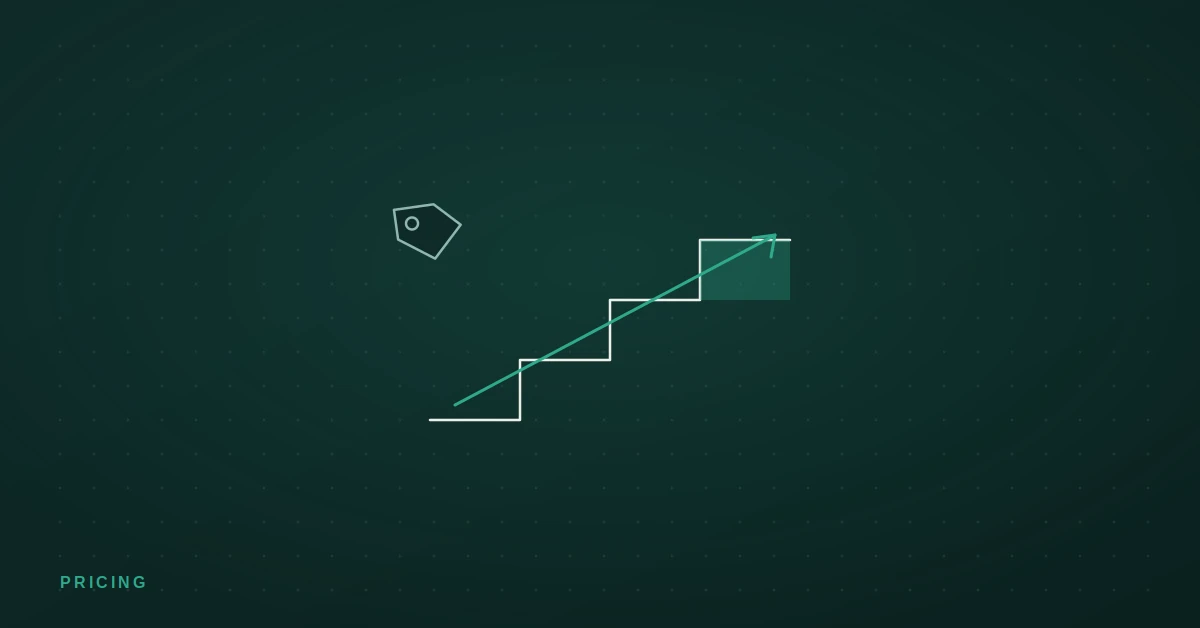
A change in price drops almost straight to profit, because it costs nothing to deliver. Winning the same improvement through volume means acquiring more customers, which costs money. That is why a modest, well-judged price increase can move the bottom line more than a large push on acquisition. Pricing also sets the ceiling on what you can spend to grow: the more margin each sale carries, the more you can afford to acquire the next customer.
The common pricing mistakes
Three show up constantly. The first is cost-plus pricing: adding a fixed margin to cost, which ignores what the customer would actually pay and usually leaves money behind. The second is copying competitors, which anchors you to their costs and their strategy instead of your value. The third is setting a price once and never revisiting it, so the price drifts out of line with the offer as the product and market change. All three treat pricing as a one-time calculation rather than a strategic decision.
What are the main pricing approaches?
Cost-based pricing
Price built up from cost plus a target margin. Simple and safe on paper, but it ignores demand and value, and tends to underprice products customers value highly. Useful as a floor to check you are not selling at a loss, weak as a strategy.
Competitor-based pricing
Price set relative to what competitors charge. Useful as one input, because customers do compare, but dangerous as the main method: it hands your pricing power to competitors who may have different costs, funding or goals.
Value-based pricing
Price set on the value the customer gets, not your cost. This is the approach that scales best, because it captures more of the value you create and funds the acquisition needed to grow. It takes more work: you have to understand what the outcome is worth to the customer, and segment by willingness to pay.
How pricing ties to acquisition and margin
Price is what funds growth. Every euro of margin you keep on a sale is a euro you can spend acquiring the next customer. Underpricing loses profit and, worse, starves acquisition and slows the whole growth engine. The number that connects them is contribution margin after acquisition: if the price does not leave enough margin to cover the cost of acquiring a customer, scaling spend makes losses bigger. We break this down in what is contribution margin (CM1, CM2, CM3).
How to change price without losing customers
Raising price feels risky, but it is usually less risky than it looks when done carefully. Change price on new customers first, so you learn the effect before touching your existing base. Pair a price rise with a clear reason and, where possible, added value, so the change reads as fair. Move existing customers with notice and, if it helps, a grandfathered rate for a period. Test on a segment before rolling out broadly. Watch conversion and retention closely, and be ready to adjust. Most companies discover the market absorbs a considered increase far better than they feared.
Frequently asked questions
Why is pricing such a powerful lever?
A price change flows almost entirely to profit because it costs nothing to deliver, and it sets how much margin you have to spend acquiring customers. A small, well-judged increase can move the bottom line more than a large push on volume.
What is the best pricing approach for a scaling company?
Value-based pricing scales best, because it captures more of the value you create and funds the acquisition needed to grow. Use cost as a floor and competitors as one input, but set price on customer value.
What are the most common pricing mistakes?
Cost-plus pricing that ignores what customers would pay, copying competitors instead of pricing on value, and setting a price once and never revisiting it as the product and market change.
How do I raise prices without losing customers?
Change price on new customers first, pair the rise with a clear reason and added value, move existing customers with notice, test on a segment, and watch conversion and retention. A considered increase is usually absorbed better than expected.
Leaving margin on the table?
Pricing is often the fastest fix we find in a diagnosis. Request a strategy call and we will look at whether your price is costing you growth.