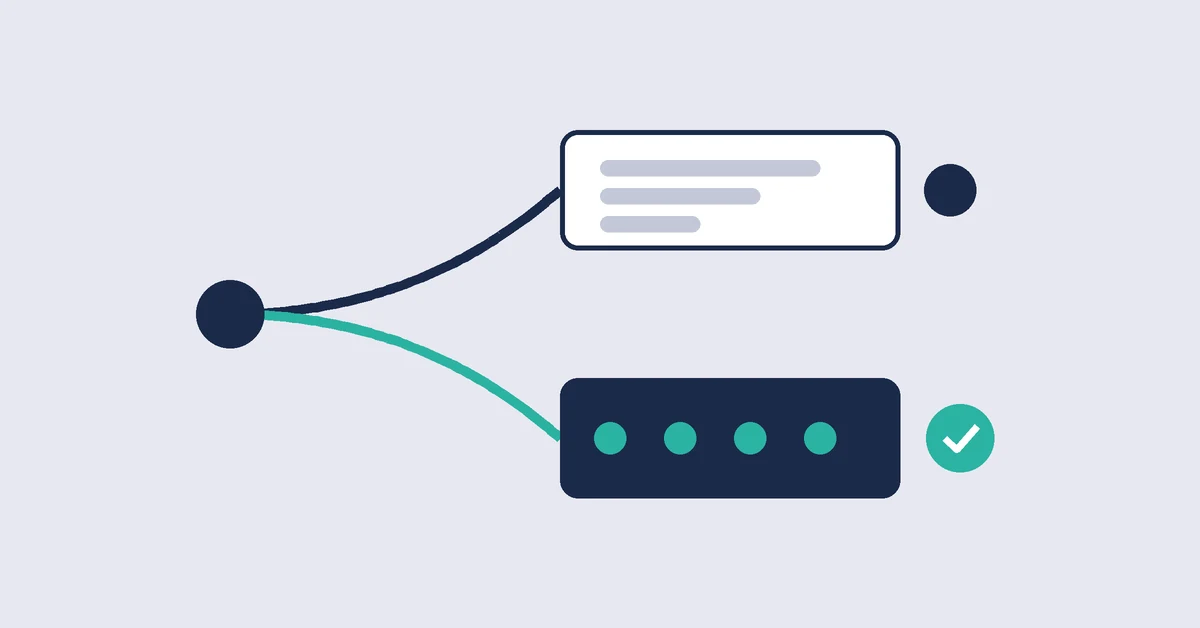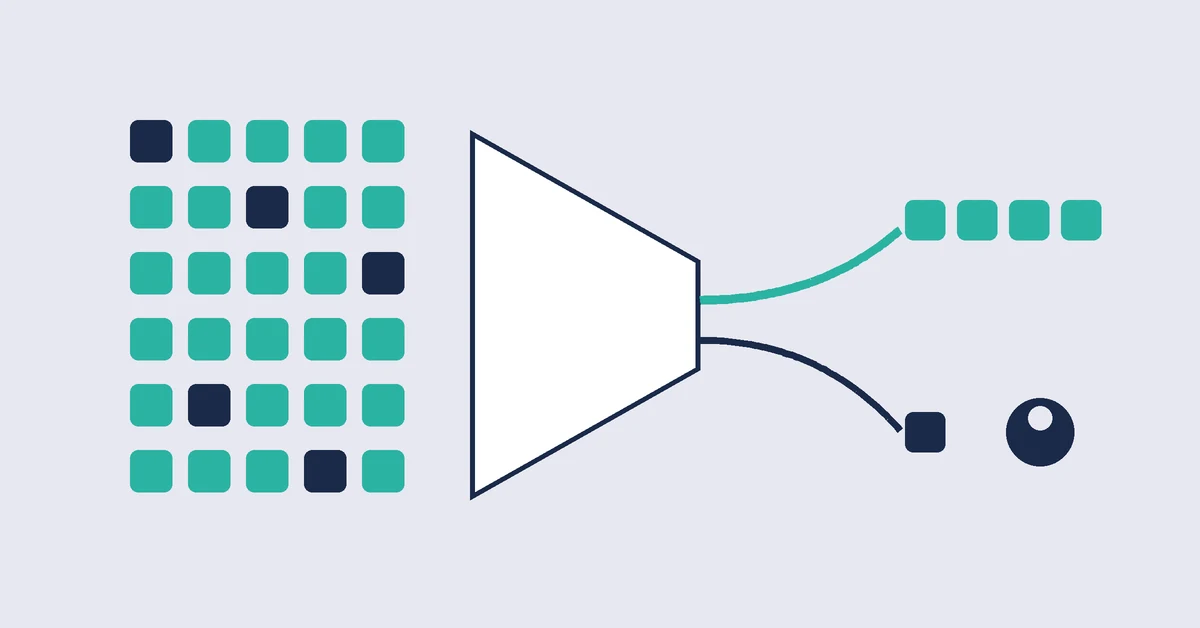

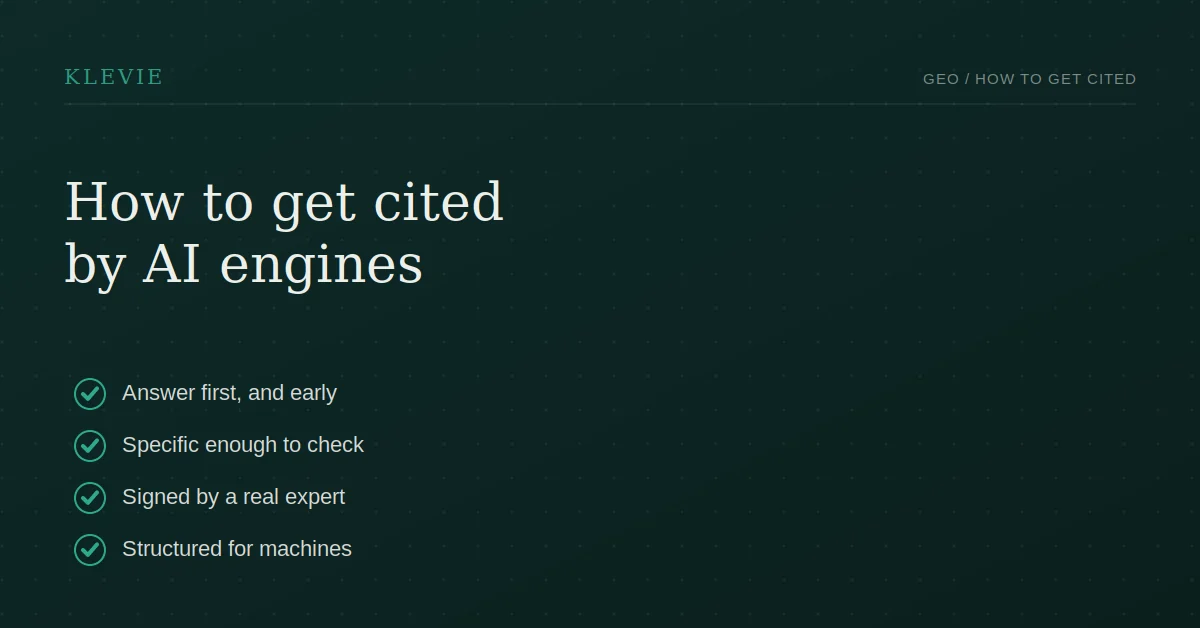
To be cited by an AI answer engine, make your content the safest source it can find for the question: answer directly and early, be specific enough to be checkable, publish under a real expert’s name, and structure the page so a machine can read it. There is no trick and no guarantee, because the engine is trying not to be wrong, so the way to be picked is to be the source least likely to make it wrong. This is the practical version of that.
Start from what the engine is trying to do
Everything below follows from one fact: an answer engine wants to give its user a correct, useful answer without being wrong. Claude, ChatGPT, Perplexity, Gemini and AI Overviews differ in the details, but they share that goal. So the question “how do I get cited” is really “how do I become a source an engine can safely rely on”. Frame it that way and the tactics stop being tricks and start being obvious.
Answer the question directly, and early
Put the answer in the first line or two, before the context and the caveats. An engine lifting a clear, self-contained answer from the top of your page is doing less work and taking less risk than digging one out of the middle of a long build-up. Open each section the same way: a heading phrased as the question a person would ask, and an answer immediately under it. This is the single highest-value habit in GEO, because it maps your content onto the shape of the questions engines are answering.
Be specific enough to be checkable
Generic advice fails to earn a citation, because an engine cannot verify it and gains nothing by attributing it. Specifics work the other way: a named method, a real number, a concrete step, an actual example. If your page says “optimize your pricing”, it gives an engine nothing to stand on. If it explains the actual mechanism, with the actual detail, it becomes a source worth naming. The more your content contains things that are true and specific and hard to find elsewhere, the more reason an engine has to cite you rather than a competitor saying the same vague thing.
Bring something only you have
The strongest citable material is what nobody else can publish: your own data, your own results, a method you developed, a first-hand observation from real work. An engine reaching for a concrete figure or a named framework on your topic can only cite the source that has it. Original specifics are the closest thing to a durable advantage in GEO, because they cannot be copied by volume.
Publish under a real, identifiable expert
Content signed by a named person with genuine authority on the subject is safer for an engine to trust than anonymous text. Give each piece a real author, with a real role, real credentials, and a link to a profile that backs it up. Mark up that authorship so a machine can read it. This is the same expertise-and-trust signal search engines already used, and it carries into GEO directly, because an engine deciding whether to rely on a claim is helped by knowing a credible person stands behind it.
Structure the page so a machine can read it
Several concrete, unglamorous things make a page easier for an engine to parse and reuse. Headings phrased as real questions. Statements that are self-contained, so a sentence lifted on its own still makes sense and stays true without the surrounding paragraph. Structured data that tells the engine what the page is, who wrote it, and what questions it answers. Clean, well-organized formatting rather than a wall of undifferentiated text. None of these is a hack; each one lowers the effort and risk for an engine choosing whether to draw on you.
Build authority beyond the page
Engines weigh how a source is regarded elsewhere, so being cited is easier when your brand and your authors are visibly referenced across the web, in reputable places that discuss your field. This is slower work than editing a page, and it compounds: the more your expertise is acknowledged where the engine can see it, the more readily it treats you as a source. This overlaps with the reputation and link work that has always supported organic discovery.
Check whether it is working
GEO is measurable in a direct, if manual, way. Take the questions your customers actually ask, put them to the answer engines your market uses, and see who gets named. If competitors are cited and you are not, that is a gap and a brief. If you start appearing, that is the signal the work is landing. Watch too for referral traffic arriving from AI engines, which shows up as its own source and tells you when a citation is sending real visitors. Neither measure is a vanity number, both tell you whether you are becoming the source for the questions that matter.
Underneath all of it is the reassuring truth that GEO rewards genuinely useful content, which is why the tactics here read like a description of good writing. The concept behind them is set out in what generative engine optimization is, and where it sits in the wider picture is in AI for growth marketing.
Frequently asked questions
How do I get my content cited by ChatGPT or other AI engines?
Make your content the safest source for the question: answer directly and early, be specific enough to be checkable, publish under a real expert’s name, and structure the page so a machine can read it. Engines cite sources they can rely on to be correct.
Is there a trick to getting cited by AI?
No. Because the engine is trying not to be wrong, the way to be cited is to be the source least likely to make it wrong: accurate, specific, expert and well structured. Content built to game the system is what engines avoid.
What kind of content gets cited most?
Content that brings something only you have, original data, your own results, a method you developed, a first-hand observation, because an engine reaching for that specific can only cite the source that holds it.
How do I know if I am being cited by AI engines?
Ask the questions your customers ask in the engines your market uses and see who gets named, and watch for referral traffic arriving from AI engines as its own source. Both show whether you are becoming the source for the questions that matter.
Want to be the source AI answers are built from?
It comes down to content an engine can trust, on the questions your customers ask. Request a strategy call and we will map where you could be cited, and what it would take.
How we work on this: marketing and performance.