

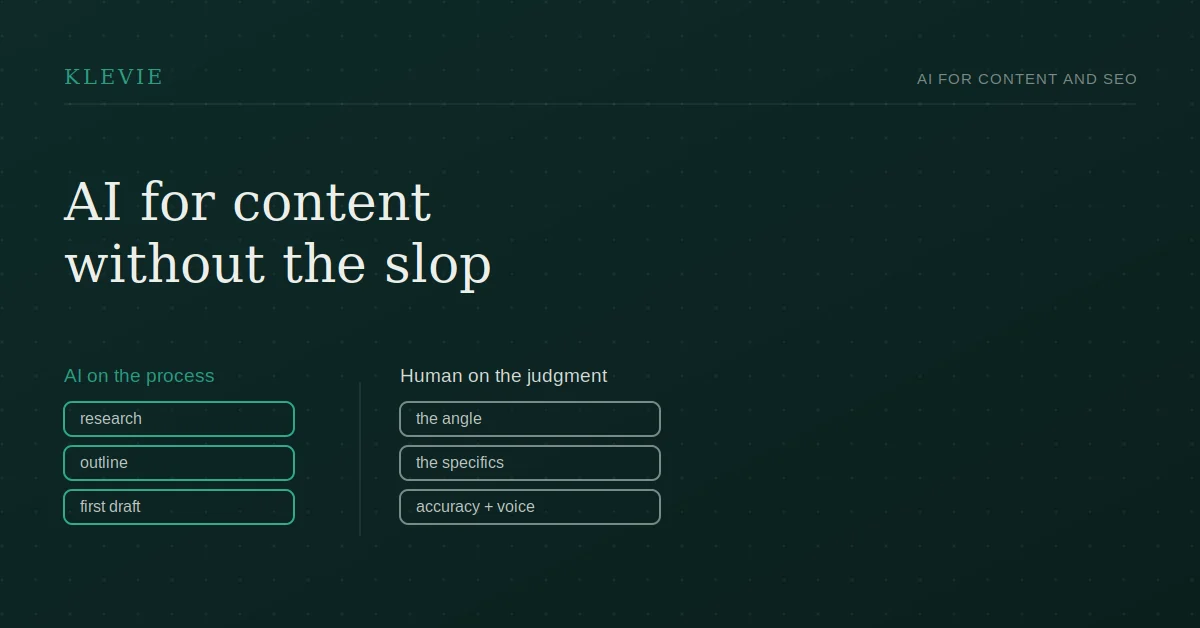
AI helps content and SEO when it removes the slow parts of a process a person still directs: research, outlining, first drafts, repetitive production. It hurts when it replaces the writer, because publishing generic AI text at volume is exactly what search and answer engines are learning to pass over. The line is simple: use AI on the process, keep a human on the judgment and the specifics. Volume is not the goal, and chasing it works against you.
Why AI content slop backfires
The tempting move is to point AI at your blog and publish a large volume of articles quickly. It backfires for a concrete reason. Search engines and AI answer engines are both selecting for content that is specific, accurate and useful, and both are getting better at passing over generic text that says nothing. Publishing a pile of thin AI articles dilutes authority instead of building it, and it can mark a site as low quality. The thing that gets cited and ranked is the specific, expert content, which is the opposite of what mass-produced AI text tends to be. So the volume play fails to help, and worse, it actively works against the goal.
Where AI genuinely helps the content process
Used on the process rather than as the writer, AI removes real time. A few places it fits cleanly, each with a person still in charge.
Research and outlining
AI can gather what is already known on a topic, surface the questions people ask, and propose an outline, which removes the slow first stretch of a piece. A person then decides the angle, the argument, and what the piece will say that others do not, which is the part that makes it worth publishing.
First drafts of well-defined sections
Where a section is factual and well scoped, AI can produce a first draft to react to, which is faster than a blank page. The writer then rewrites for accuracy, voice and the specifics only they know, which is where the value is added. The draft is a starting point, not the output.
Repetitive production at scale
Product descriptions, metadata, variations of a standard format: repetitive production with a fixed shape is a good fit, with a person reviewing rather than composing each one. The template keeps it consistent and the review keeps it honest.
Editing and structuring for GEO
AI can help restructure a draft into answer-first shape, tighten headings into the questions people ask, and check that statements stand on their own, all of which make content easier for answer engines to cite. This is editing support on content a person wrote, which is a safe and useful use.
Where a human is non-negotiable
Some parts cannot be handed to the model without the quality collapsing. The angle and the argument, what this piece says that is worth saying, come from a person. The specifics that make content citable, real data, real examples, first-hand experience, are exactly what a model does not have and will invent if asked, so they must come from you. Accuracy is a human responsibility, because a model will state something false as confidently as something true. And brand voice and judgment, what fits and what does not, stay with the writer. The rule of thumb: AI can help with the parts that are process, a person owns the parts that are judgment and truth.
The test before you publish
One question keeps content on the right side of the line: does this piece say something specific, accurate and useful that a reader could not get from a generic answer? If yes, AI helping produce it is fine. If no, more AI will not fix it, and publishing it works against you. The goal was never volume, it was being the specific, trustworthy source on the questions your customers ask, which is what gets cited and ranked. How that citation actually works is covered in how to get cited by AI answer engines, and the broader question of where AI helps marketing work is in AI for marketing workflows.
Where this sits in the wider shift in AI and marketing is set out in AI for growth marketing.
Frequently asked questions
Does AI-written content hurt SEO?
Publishing generic AI content at volume hurts, because search and answer engines select for specific, useful content and pass over filler, which can mark a site as low quality. AI used on the process, with a person keeping judgment and specifics, does not hurt.
Can I use AI to write blog content?
Use it on the process, research, outlining, first drafts, editing, while a person owns the angle, the specifics, the accuracy and the voice. The draft is a starting point, not the published output. What gets cited and ranked is the specific, expert content.
Why does publishing lots of AI content backfire?
Because volume is not the goal. Search and answer engines reward specific, accurate, useful content and pass over generic text, so a pile of thin AI articles dilutes authority rather than building it, and can mark the site as low quality.
What must a human still do when using AI for content?
Decide the angle and argument, supply the specifics that make content citable, ensure accuracy, and keep the brand voice. A model does not have your data or experience and will invent specifics if asked, so those stay human.
Want AI to help your content without wrecking it?
The line between help and slop is specific and easy to hold. Request a strategy call and we will look at how AI could speed up your content without diluting it.
How we work on this: marketing and performance.